
Ayasofia Museum And Mosque
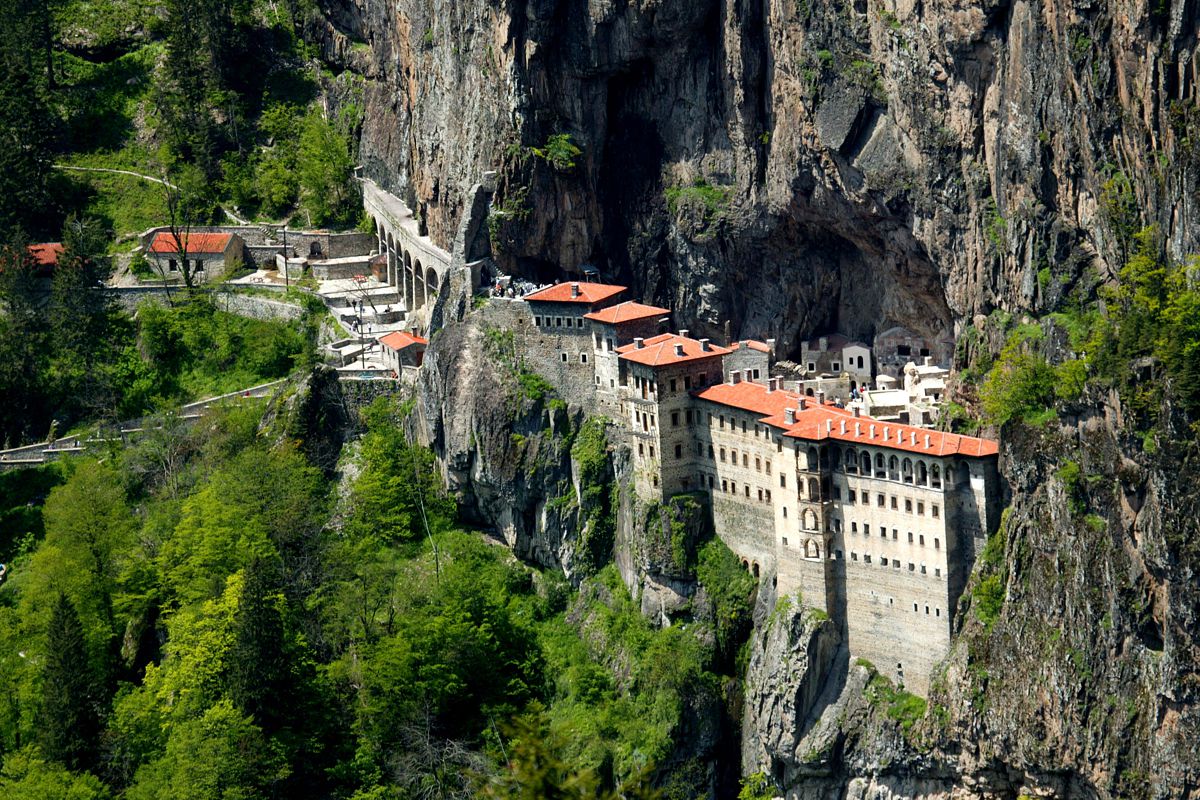
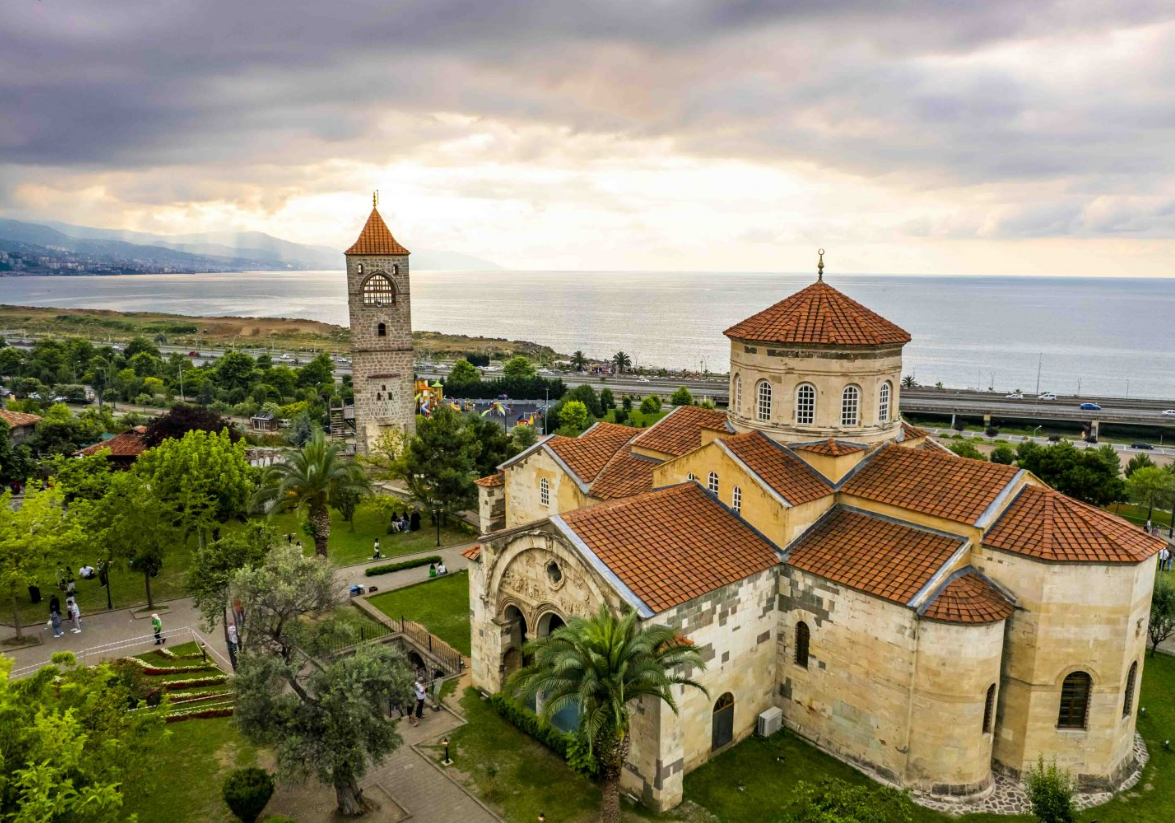
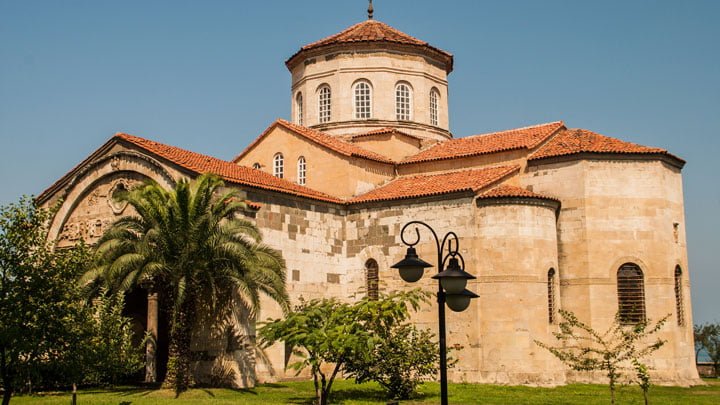
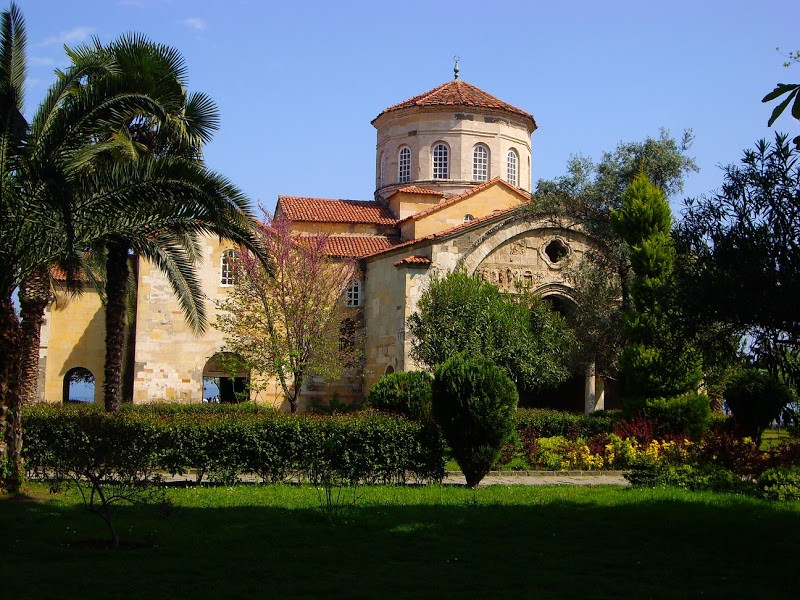
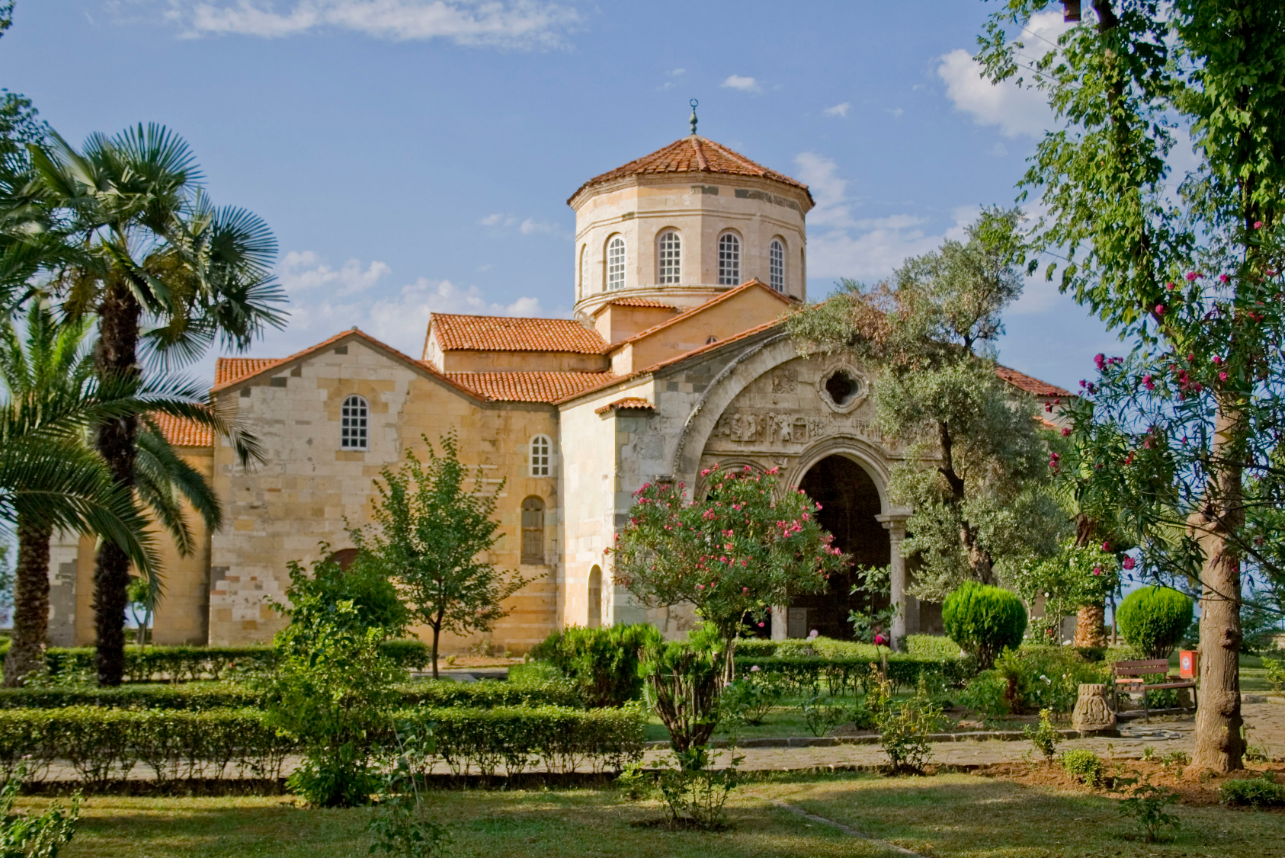
The Hagia Sophia Church in Trabzon, currently serving as a museum, was constructed during the reign of Manuel I Komnenos (1238–1263), one of the prominent rulers of the Empire of Trebizond. Following the conquest of the city by Sultan Mehmed the Conqueror in 1461, the building was converted into a mosque.
For centuries, the structure has captivated international travelers and scholars, including Evliya Çelebi (1648), Pitton de Tournefort (1701), Hamilton (1836), Texier (1864), Şakir Şevket of Trabzon (1878), and Lynch (1893).
Historical Background and Restorations
After falling into a state of neglect, the mosque was restored in 1864 through the persistent efforts of Riza Efendi of Bursa. During World War I, it served temporarily as a depot and a hospital before returning to its function as a mosque after the war. Between 1958 and 1962, a comprehensive restoration was carried out as a joint project between the Directorate of Foundations and the University of Edinburgh. It finally opened its doors as a museum in 1964.
Architectural Features
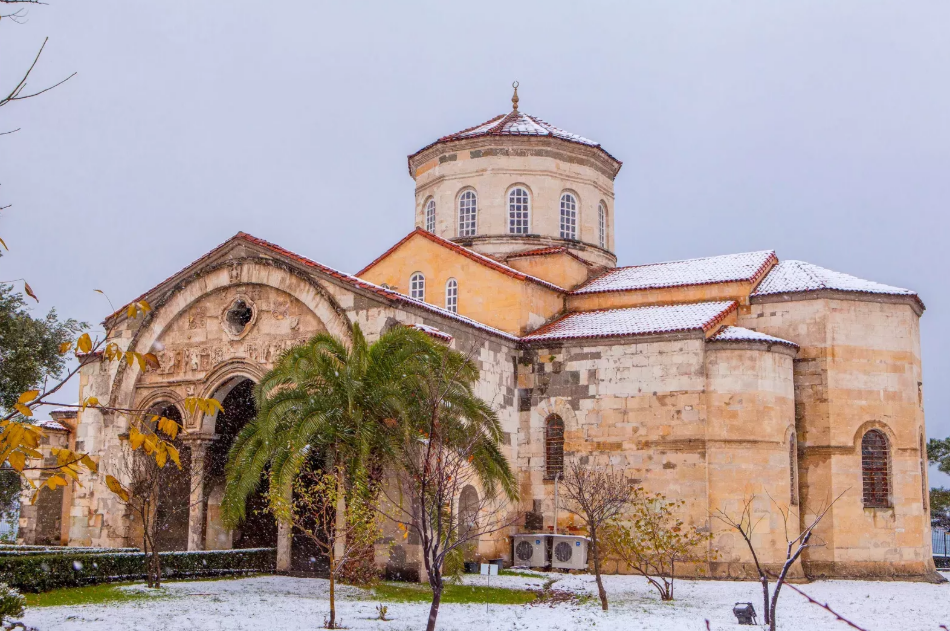
The building stands as a masterpiece of late Byzantine architecture. It follows a cross-in-square plan featuring a high central dome.
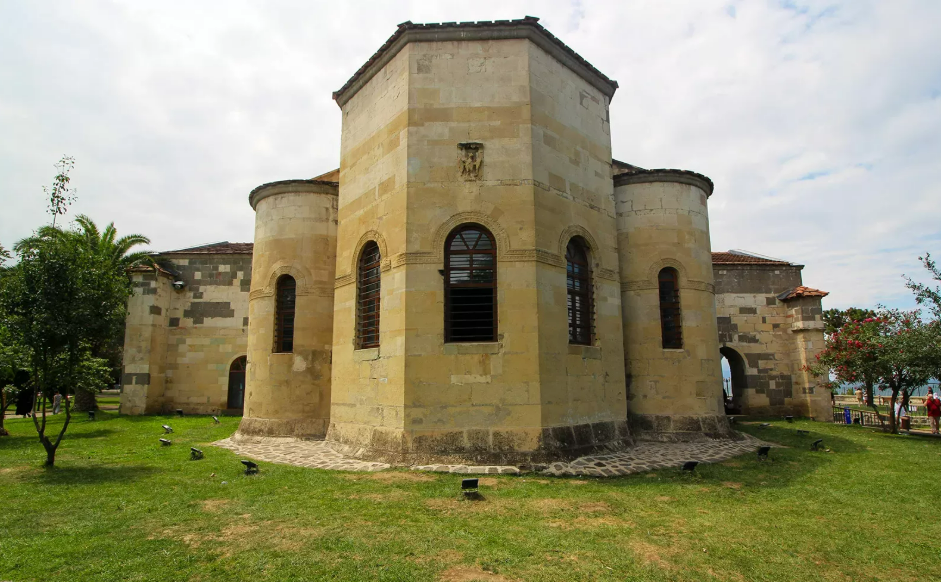
Layout: The structure includes a narthex (entrance hall) and three aisles. The central aisle ends in a pentagonal apse, while the side aisles terminate in semi-circular apses.
The Dome: The twelve-sided dome is supported by four monolithic marble columns, arches, and pendentives.
Seljuk Influence: In a unique cultural synthesis, the building incorporates Islamic Seljuk stone-carving traditions. The north and west porches feature interlocking geometric patterns and ornate niches characteristic of Seljuk art.
Artistic Highlights and Decorations
The Hagia Sophia is renowned for its sophisticated relief work and vibrant frescoes:
The Genesis Frieze (South Porch): The most striking feature is the southern facade, which depicts the story of Adam and Eve in five distinct scenes: their creation, their life in Eden, the forbidden fruit, the expulsion from Paradise, and the first murder.
The Komnenos Symbol: The keystone of the arch and the eastern facade feature a single-headed eagle, the heraldic symbol of the Komnenos dynasty that ruled Trabzon for 257 years.
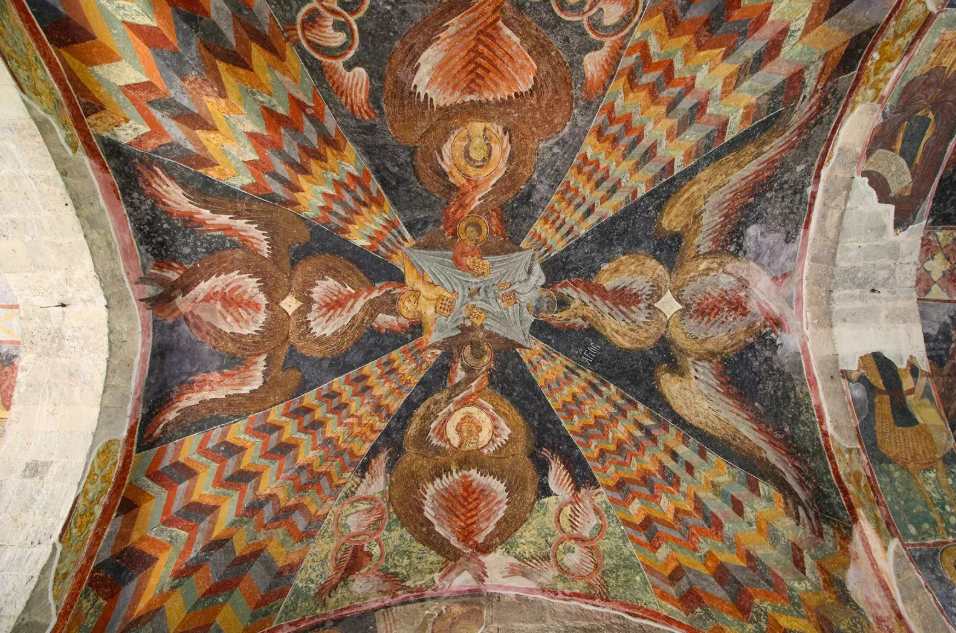
Mosaics and Frescoes: The floor beneath the dome is adorned with multi-colored marble mosaics in the opus-sectile technique. The central dome features a fresco of Christ Pantocrator, surrounded by a frieze of angels and the twelve apostles on the pendentives.
Maritime Graffiti: The exterior eastern walls contain carvings of various sailing vessels dating from 1450 to 1850. These are believed to have been etched by local sailors as offerings for divine protection.
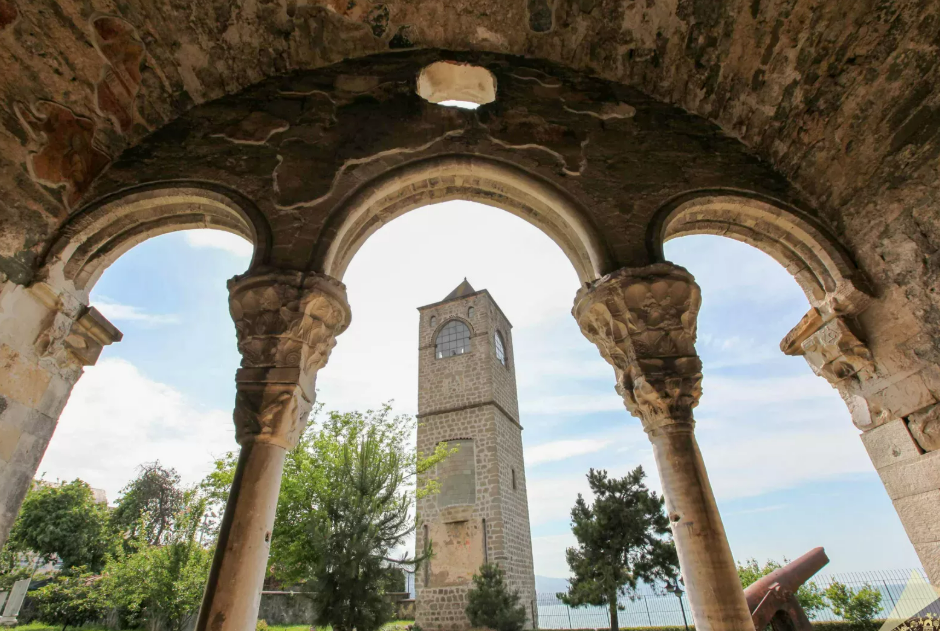
The Bell Tower
Built in 1427, the separate bell tower originally housed a chapel on its first floor. While its vaulted roof has since collapsed, several wall paintings have survived. The frescoes on the apse wall are noted for having been completed in a remarkably short period, beginning in 1443.